Why “Forbidden Foods” Set You Up To Fail
Why “Forbidden Foods” Set You Up To Fail
The problem isn’t your willpower. It’s the list.
By Chef Jeff Grandfield | Your Diabetes Reversal Roadmap
Someone handed me a list once. Right after my diagnosis.
It was a page of foods I was never supposed to eat again. Bread. Pasta. Bananas. Certain fruits. White rice. Things I’d cooked my whole career. Things I loved.
And for about two weeks, I followed that list perfectly. Then I didn’t. And when I fell off, I didn’t just have a slice of bread. I ate like the list had never existed. Sound familiar?
That’s not weakness. That’s how human beings respond to restriction.
Why Forbidden Food Lists Backfire
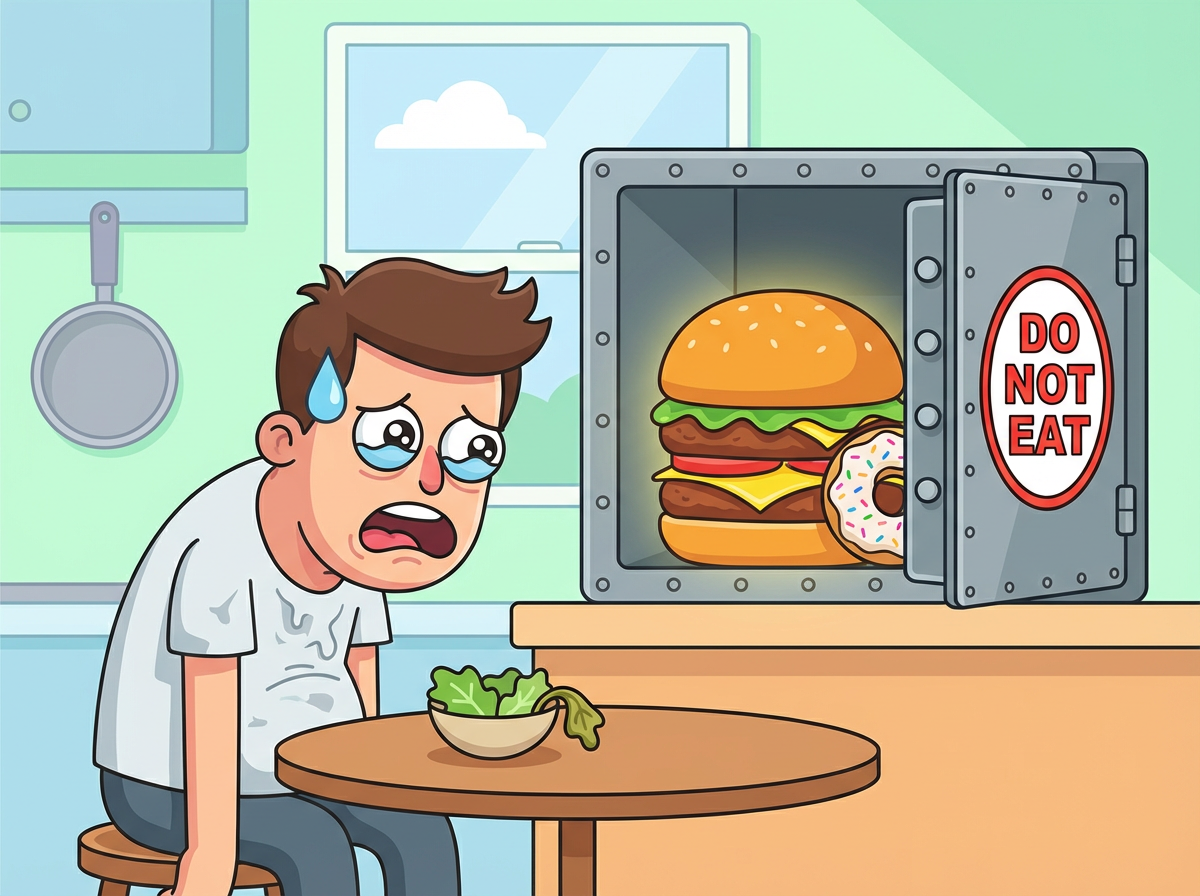
Here’s what the list doesn’t tell you: the moment you label a food “off limits,” your brain wants it more. This isn’t a character flaw. It’s psychology.
Researchers call it the “forbidden fruit effect.” When we’re told we can’t have something, we fixate on it. And when we eventually eat it — because we almost always do — we feel like we’ve failed completely. That shame spiral is the real problem. Not the bread.
The forbidden list doesn’t just fail you. It sets you up to fail you.
The All-or-Nothing Trap Is a Blood Sugar Problem Too
Most diabetes eating plans are built on restriction. Cut this. Eliminate that. Never eat the other thing. And that approach might work for a week or two. But it’s not sustainable. And anything that isn’t sustainable isn’t a solution — it’s just a countdown to the next restart.
I’ve talked to hundreds of people managing Type 2 diabetes. Almost every one of them says the same thing: “I know what to eat. I just can’t stick with it.” That’s not a knowledge problem. That’s a program design problem.
The all-or-nothing mindset doesn’t just hurt your motivation. It actually affects your body. Stress raises cortisol. Cortisol raises blood sugar. So the guilt spiral after “cheating” can spike your numbers just as much as the food itself did. The shame isn’t neutral. It costs you.
What Actually Works: Swap, Don’t Eliminate
I spent 15 years cooking professionally before my diagnosis. The first thing I figured out is that you don’t have to give up flavor to eat better. You swap.
White rice becomes cauliflower rice — or half-and-half, which is where most people actually stick. Regular pasta becomes chickpea pasta, or you just eat a smaller portion with a bigger protein. The banana doesn’t disappear from your life. You eat half, with peanut butter, and you move on.
Swaps keep you in the game. Elimination takes you out of it.
This is the Food-First Approach I use with everyone I work with. You start with what you already eat. You find the swap that fits your life and your taste buds. You build from there. No forbidden list. No shame. Just small, real changes that actually stick.
“Next Meal, Not Monday” Is the Real Rule
Here’s the only food rule I want you to carry with you: next meal, not Monday.
You didn’t blow it because you had pizza at a birthday party. You didn’t fail because you ate the bread at the restaurant. One meal doesn’t define your A1C. The pattern does.
The restart doesn’t happen next week. It happens at your next meal. That’s it. That’s the whole rule.
I’ve lowered my own numbers not by being perfect, but by being consistent enough. Consistent doesn’t mean never slipping. It means getting back on track before the slip becomes a slide.
What You Can Do Right Now
Pick one food from your mental “forbidden list.” Just one.
Now ask yourself: is there a swap that keeps the spirit of that food but works better for your blood sugar? A smaller portion? A different base? A different time of day to eat it?
You’re not trying to fix everything. You’re trying to find one swap you’d actually do. That’s the Habit Engine in action — one small change, done consistently, building toward something real.
If you want help figuring out where to start, I put together a free QuickStart Guide you can get it here It’s the first three chapters of my book, free. It walks you through exactly how I rebuilt my eating habits without giving up the food I love — and how you can do the same.
The only program that works is the one you’ll actually do.
Throw out the forbidden list. Start with the next meal.