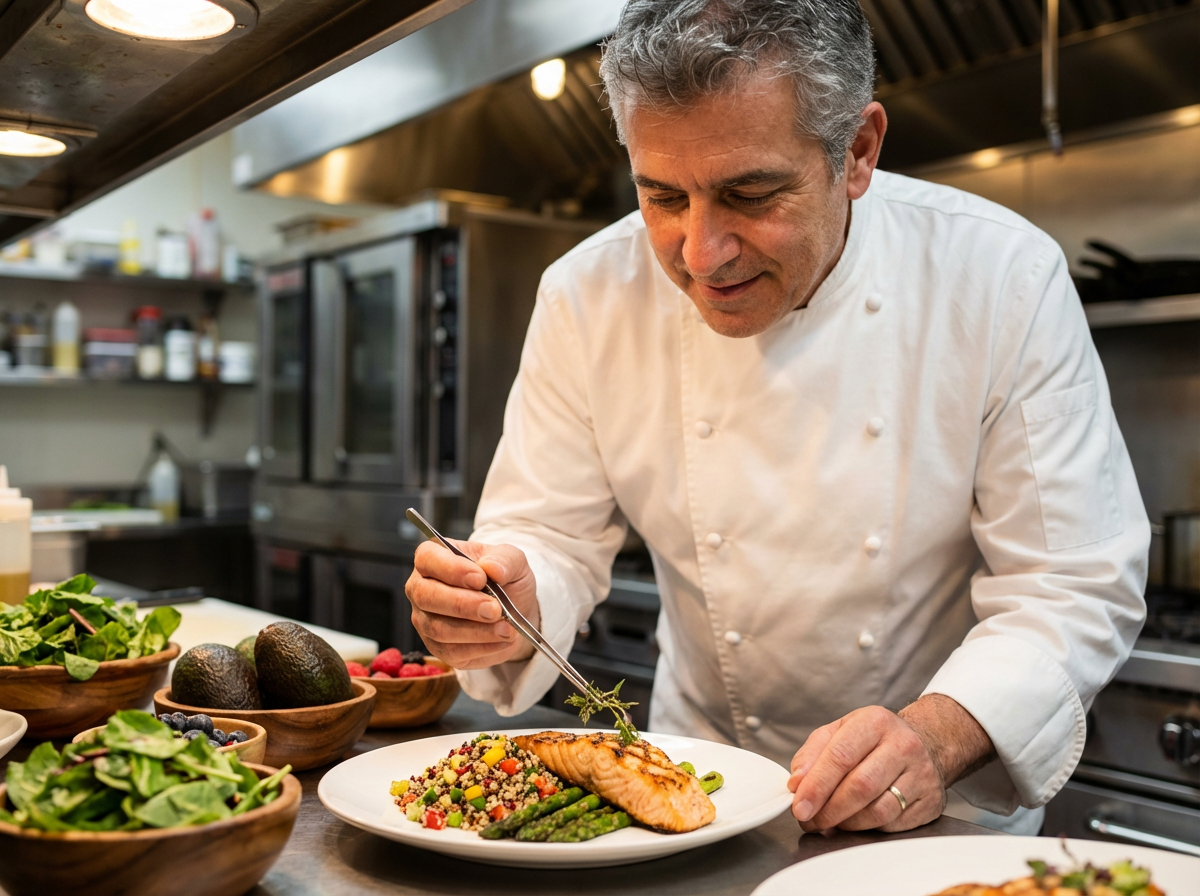
What A Chef Knows About Diabetes That Doctors Don’t
Most diabetes advice comes from doctors, dietitians, and nutritionists.
I took a different approach.
I’m a chef.
30+ years in professional kitchens.
CIA trained.
Former restaurant owner.
And I’ve been managing Type 2 diabetes for over a decade.
So when my doctor told me I couldn’t have surgery because my A1C was too high, I didn’t just follow the standard advice.
I applied everything I knew about food—from three decades of cooking professionally—to figure out what actually works.
And what I discovered changed everything.
The Problem Isn’t The Food
Here’s what most people miss:
The problem isn’t the food itself.
It’s the relationship with food.
The fear.
The guilt.
The shame.
The all-or-nothing thinking.
Most diabetes advice focuses on restriction:
❌ No carbs.
❌ No sugar.
❌ No processed food.
❌ No eating out.
❌ No “bad” foods.
And for a few days—maybe even a few weeks—you can white-knuckle it.
But eventually, you crack.
You eat something “off plan.”
And then the shame spiral starts:
“I messed up. I have no discipline. I’ll never get this right.”
So you give up.
Not because you failed.
But because the approach was set up to fail from the start.
What I Learned As A Chef
Here’s what 30 years in kitchens taught me:
Good food doesn’t have to be complicated.
And healthy food doesn’t have to taste like punishment.
Most people think eating for diabetes means:
- Bland chicken breast
- Steamed vegetables with no seasoning
- Giving up flavor
- Never enjoying a meal again
But that’s not true.
You can eat food that:
- Tastes amazing
- Supports your blood sugar
- Doesn’t require complicated recipes
- Fits into your life
You just need to know how to make smart swaps without sacrificing flavor.
And that’s where most diabetes advice falls short.
Because dietitians and doctors know nutrition.
But they don’t know flavor.
The Chef’s Approach To Diabetes-Friendly Eating
Here’s the framework I use—and teach:
Principle 1: Swap, Don’t Eliminate
Don’t remove foods you love.
Replace them with better versions.
Examples:
Instead of white rice → cauliflower rice
(Season it right and you won’t miss the carbs)
Instead of pasta → zucchini noodles or shirataki noodles
(Toss with olive oil, garlic, and Parmesan—tastes like the real thing)
Instead of mashed potatoes → mashed cauliflower
(Add butter, cream cheese, and garlic—no one will know the difference)
Instead of bread → lettuce wraps or low-carb tortillas
(Load them with flavor and you won’t feel deprived)
The key?
Make the swap taste so good you don’t feel like you’re missing out.
Principle 2: Flavor First
Here’s the mistake most people make:
They focus on what’s “healthy” and forget about flavor.
So they end up with bland, boring meals.
And they hate it.
But here’s the secret:
Flavor doesn’t come from carbs. It comes from seasoning.
You can make cauliflower rice taste amazing if you:
- Sauté it in butter or olive oil
- Add garlic, onion, and fresh herbs
- Season it with salt, pepper, and a squeeze of lemon
You can make zucchini noodles taste incredible if you:
- Toss them in a rich tomato sauce
- Add Parmesan, fresh basil, and a drizzle of olive oil
- Season properly
Most “healthy” food tastes bad because it’s under-seasoned—not because it’s inherently boring.
Principle 3: Build Around What You Already Love
Don’t start by listing everything you have to give up.
Start by listing what you already enjoy that happens to support your blood sugar.
Love grilled chicken? Great. Build meals around it.
Love eggs? Perfect. There are a hundred ways to cook them.
Love avocado? Excellent. It’s one of the best foods for blood sugar.
Then ADD better versions of the foods you miss.
Miss pasta? Try shirataki noodles or zucchini noodles.
Miss rice? Try cauliflower rice.
Miss bread? Try low-carb wraps or cloud bread.
You’re not removing. You’re upgrading.
Principle 4: Keep It Simple
You don’t need complicated recipes.
You don’t need 15 ingredients.
You don’t need to spend 2 hours in the kitchen.
Some of my go-to meals:
- Grilled chicken, roasted vegetables, avocado
- Eggs scrambled with spinach and cheese
- Steak, cauliflower mash, side salad
- Shrimp stir-fry with zucchini noodles
Simple. Fast. Delicious.
And every single one supports stable blood sugar.
Real-World Example
Let me show you what this looks like in practice:
Old approach (what most people try):
Breakfast: Plain oatmeal (boring, spikes blood sugar)
Lunch: Grilled chicken breast, steamed broccoli (bland, no satisfaction)
Dinner: Baked fish, plain salad (feels like punishment)
Chef’s approach (what actually works):
Breakfast: Scrambled eggs with spinach, cheese, and avocado (tastes amazing, keeps you full, stable blood sugar)
Lunch: Chicken thighs (more flavor than breast) with roasted Brussels sprouts tossed in olive oil and garlic, side of mixed greens with balsamic vinaigrette
Dinner: Grilled steak with mashed cauliflower (butter, cream cheese, garlic), sautéed green beans with bacon
Same nutrition profile. Completely different experience.
One feels like deprivation.
The other feels like a meal you’d order at a restaurant.
Guess which one you’ll actually stick with?
The Mindset Shift
Here’s the shift that changes everything:
Stop thinking about diabetes-friendly eating as restriction.
Start thinking about it as an upgrade.
You’re not giving up good food.
You’re learning how to make better versions of the foods you already love.
And when food tastes good—really good—you don’t need willpower to stick with it.
You just eat it.
Because you want to.
Your Turn
If you’re ready to stop choking down bland “healthy” food and start eating meals that actually taste good, here’s where to start:
Try the $1 trial.
Inside the membership, you get:
- Chef-designed meal guides (every recipe tastes amazing)
- Simple food swaps that actually work
- Weekly coaching calls where I answer your food questions
- A community of people building the same habits
10 days for $1.
Cancel anytime before Day 11 if it’s not for you.